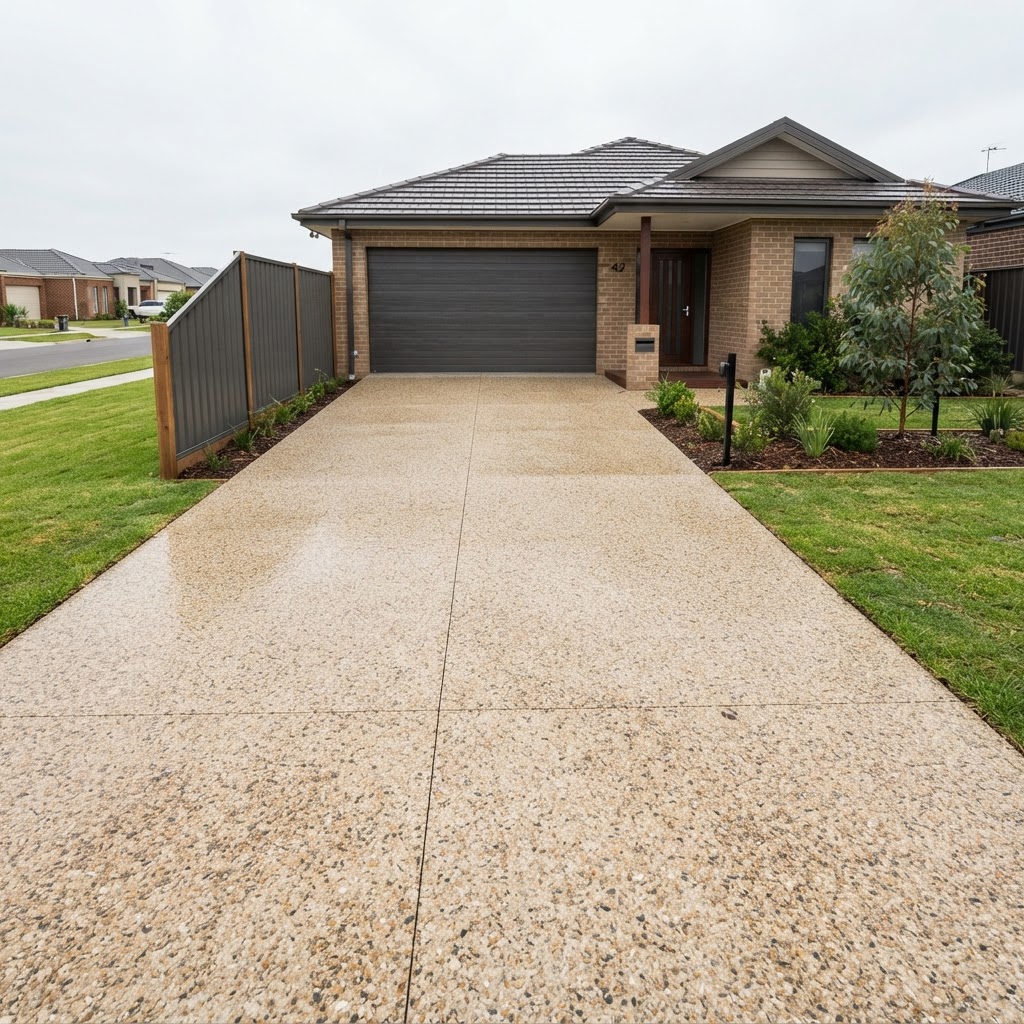
If you're deciding between exposed aggregate and plain concrete for a driveway, a path, or a patio, you've probably already noticed that the advice online splits into two camps: the people selling exposed aggregate who tell you it's better in every way, and the people who've been quoted for it and want to hear that plain concrete is fine. The honest answer is in the middle, and it depends on where the concrete is and what you want from it. This is the comparison we give our own customers across Greater Dandenong.
The comparison at a glance
| Factor | Plain concrete | Exposed aggregate |
|---|---|---|
| Wet grip | Low (slippery when wet) | High (stone surface gives traction) |
| Hides oil & tyre marks | No — marks show clearly | Yes — texture camouflages marks |
| Colour options | Grey, or oxide-through colour | 40+ stone blends, cream to charcoal |
| Maintenance | Low; reseal optional | Reseal every 2–4 years |
| Lifespan (done right) | 25 – 40 years | 25 – 40 years |
| Buyer appeal at sale | Neutral — expected | Positive — reads as an upgrade |
The two finishes last the same number of years when they're both poured properly — the lifespan is in the base, the reinforcement and the joints, not the surface. What you're paying the extra for is the surface: the look, the grip, the way it hides marks, and the buyer appeal. Whether that's worth it depends on where the concrete sits.
The honest verdict in one paragraph
Plain concrete is the right choice for rentals, side yards, and anywhere you don't see it every day. Exposed aggregate is the right choice for what you, your guests, your car and the street see — the front driveway, the entry path, the alfresco. The difference is the best money in the project when it's on a surface that defines the front of your home. On a back path that nobody looks at, it's money you don't need to spend.
Choosing by location
- Driveway — exposed aggregate. It's the surface that defines the front of the house, it gives grip on a slope, and it hides the oil and tyre marks a plain driveway shows within a month. The one exception is a rental property, where plain concrete is the pragmatic choice.
- Path / entry — exposed aggregate for the front entry path (it's the first thing guests and buyers see). Plain concrete is fine for a side or back path that's purely functional.
- Pool surround — exposed aggregate, in a 7mm blend. The grip is essential around a wet pool, and the smaller stone is comfortable under bare feet. Plain concrete around a pool is slippery and not recommended.
- Alfresco / patio — exposed aggregate or honed concrete. The entertaining area reads as an extension of the home, and the finish matters. Plain concrete is the budget option; honed is the premium one.
Five questions to settle it
- Will I see this concrete every day when I come home? If yes, exposed aggregate.
- Is it a slope or anywhere water sits? If yes, exposed aggregate for the grip.
- Is it a rental or a property I'm not renovating for sale? If yes, plain concrete is fine.
- Is it a pool surround? If yes, exposed aggregate in a 7mm blend — not optional.
- Is the extra within my budget for the surfaces that matter? If yes, spend it on the front; save it on the back.
If you're still unsure, the quickest way to settle it is to come and look at stone blend samples. We bring them to the quote. Most people know within thirty seconds of seeing the blends next to their brick or render which one suits the house — and that's a better way to decide than reading another comparison online.