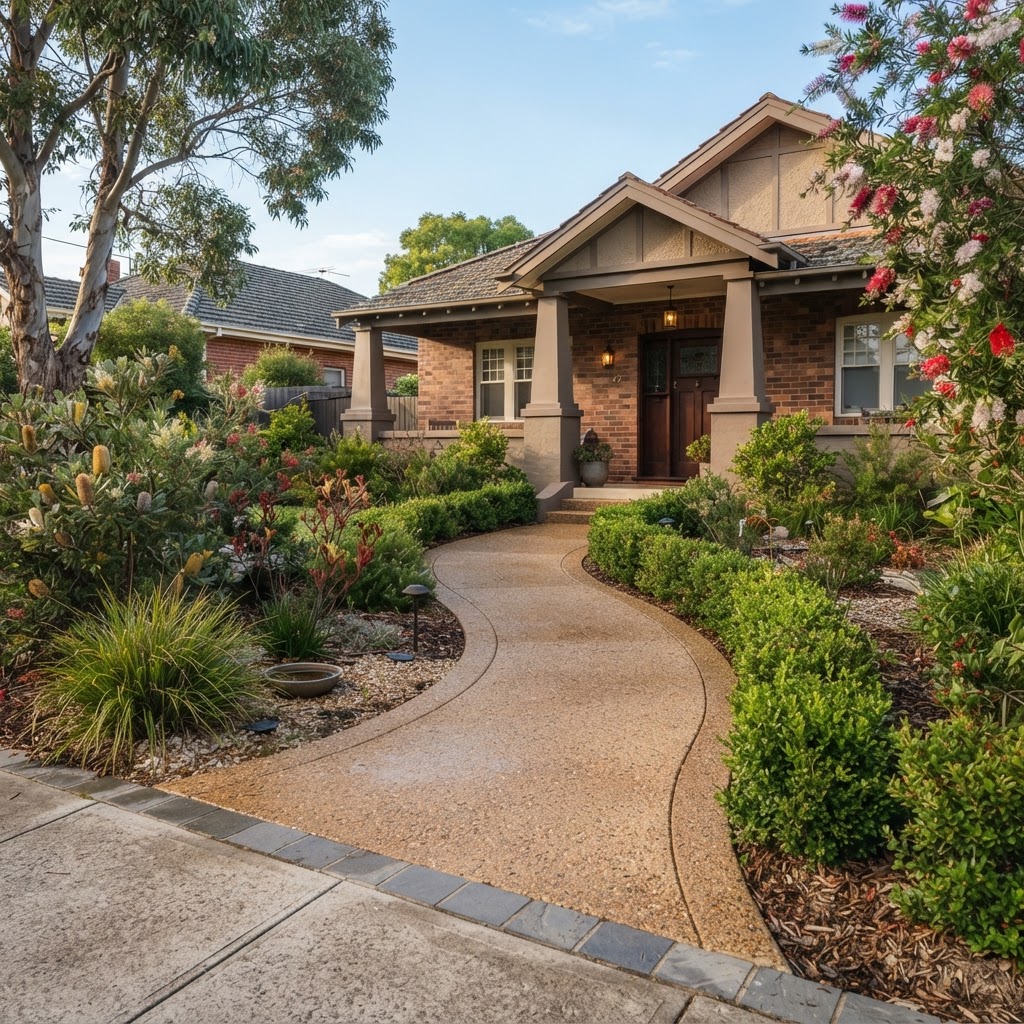
Concrete Paths
Concrete Paths Dandenong — Garden Paths, Side Paths & Everything Between
Front garden paths, side access for bins and mowers, perimeter paths and edging. Proper sub-grade compaction, control joints at the right spacing, and falls that keep water away from your footings.
A path has one job: get people from the street to the door with no puddle and no trip. But a good path also frames the garden, handles the bins and the mower, and lasts through twenty years of Melbourne weather without cracking or lifting. We pour paths that do all of it.
We replace more paths than we build new ones around Dandenong's older blocks. The story is always the same — tree roots from the nature strip have lifted the slab, the fall was never right so water pooled against the house, or the path was poured thin over soft fill and cracked under its own weight. Every one of those failures is preventable with proper sub-grade compaction, control joints at the right spacing, and a fall that actually works. That's what we do.
What we pour: front garden paths in plain or exposed aggregate — exposed is the most popular because it hides leaf tannins and looks better longer; side paths at 900mm to 1.2m wide for bin and mower access; perimeter paths around the house; and concrete kerb, edging and steppers for garden definition. Curved or straight, we form it properly and quote the curved formwork up front so there's no surprise on the bill.
What We Build
Paths we pour
Front garden paths
The path from the street to your front door. Exposed aggregate is the most popular choice here — it hides leaf tannins from nature-strip trees, gives grip when wet, and looks better for longer than plain concrete.
Side paths (bin & mower access)
900mm to 1.2m wide, built to take the weight of a loaded wheelie bin or a mower. We check the fall so water runs to the garden, not against the side of the house.
Perimeter paths
Paths around the house perimeter — for access, maintenance, or to keep foot traffic off the garden. Built with a fall away from the footings so water doesn't pool against the slab.
Kerb, edging & steppers
Concrete garden edging to define beds, kerb for driveway edges, and steppers set into a path or lawn. Quoted up front.
Local Specifics
Details that decide a path's lifespan
Sub-grade compaction
A path poured over soft fill or uncompacted ground will crack — not might, will. We excavate to a firm sub-grade and compact a road-base where the ground needs it. This is the step that separates a path that lasts twenty years from one that cracks in two.
Control joints every 1.2–1.5m
Concrete cracks where it wants to. Control joints are scored or cut lines that tell the concrete where to crack — in a straight line at the joint, not a random crack across the path. We space them at 1.2–1.5m for paths, closer on curved sections.
Tree-root zones
Any Dandenong nature strip with a street tree is a root zone. We either install a root barrier to stop roots lifting the path, or pour a thicker slab with heavier mesh so the path holds even if roots try to lift it. We'll tell you which at quote.
Falls — 1-in-100 minimum away from footings
Water should run off the path to the garden, not pool on it or run toward the house. We set a minimum fall of 1-in-100 (10mm per metre) away from footings. On flat blocks we may need a strip drain at the low point.
FAQ
Frequently Asked Questions
100mm on a compacted base for foot traffic. We don't pour paths thin — a 75mm path over soft fill will crack under a wheelbarrow load or a delivery trolley. 100mm with proper sub-grade compaction and control joints at the right spacing is the standard that lasts.
We can get close, and we recommend samples first. Exposed aggregate colour depends on the stone blend in the mix, and blends change over time. We'll bring sample stones to your quote so you can see the match against your existing path before we commit.
We take on small path jobs — a side path or a garden edge — but we'll tell you the minimum straight over the phone so you know before we come out. Small jobs have a fixed setup cost (truck, crew, formwork) that doesn't shrink with the area, and we'd rather you know that up front than get a surprise on the quote.
Free Written Quote
Ready for a path that gets you there safely?
Call now or send your details — we'll come out, check the route and the fall, and give you an honest itemised price in writing.